Throwing this here for the sake of posterity:
A lot of tables run right over the encounter initiative roll in OSE and BX games, but that mechanic is what allows PCs and monsters alike to avoid combat, run, hide, parley, surrender, and more.
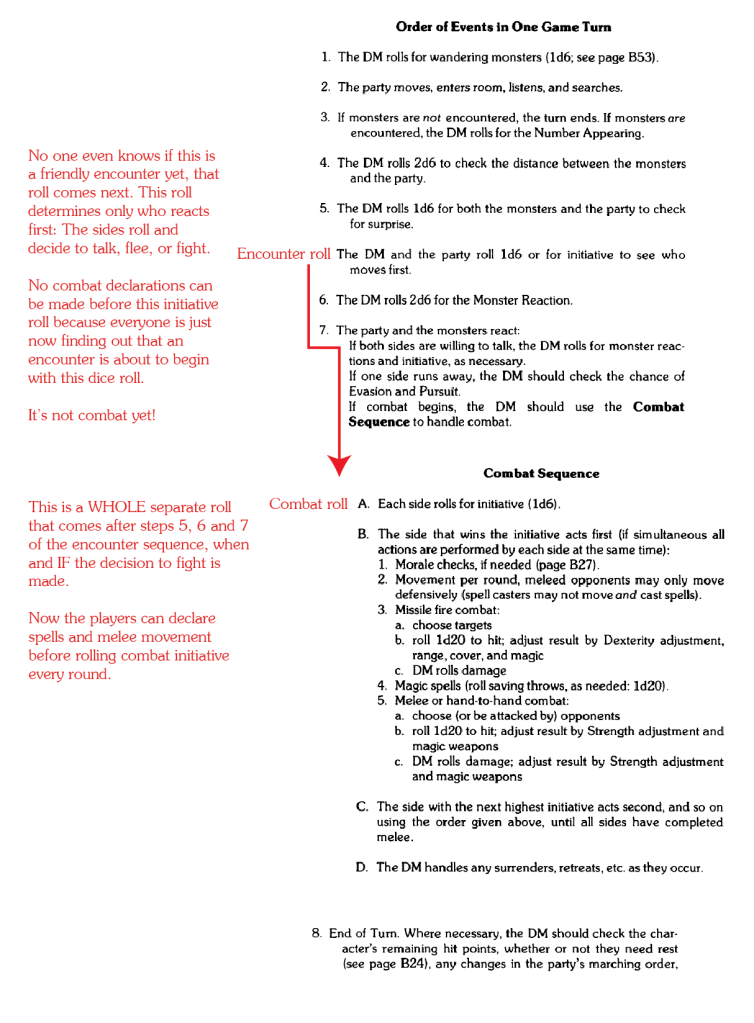
Let’s review the sequence, starting with the encounter:
4. Roll for wandering, type, number, distance
5. Roll for surprise (none), Roll ENCOUNTER initiative
6. Roll monster reaction
7. Sides react, deciding to fight, talk, or flee.
If combat erupts:
A. Declare spells, movement, roll COMBAT initiative every round
B. Winner acts (Move, Missile, Magic, Melee)
C. Loser(s) act
D. Surrenders, retreats, check morale at 1st and half
So there are definitively two rolls.
One happens right when the encounter has barely begun, and the other happens after steps 5, 6, and 7 are complete. A LOT of things can happen in that time, and only one of those things is combat:
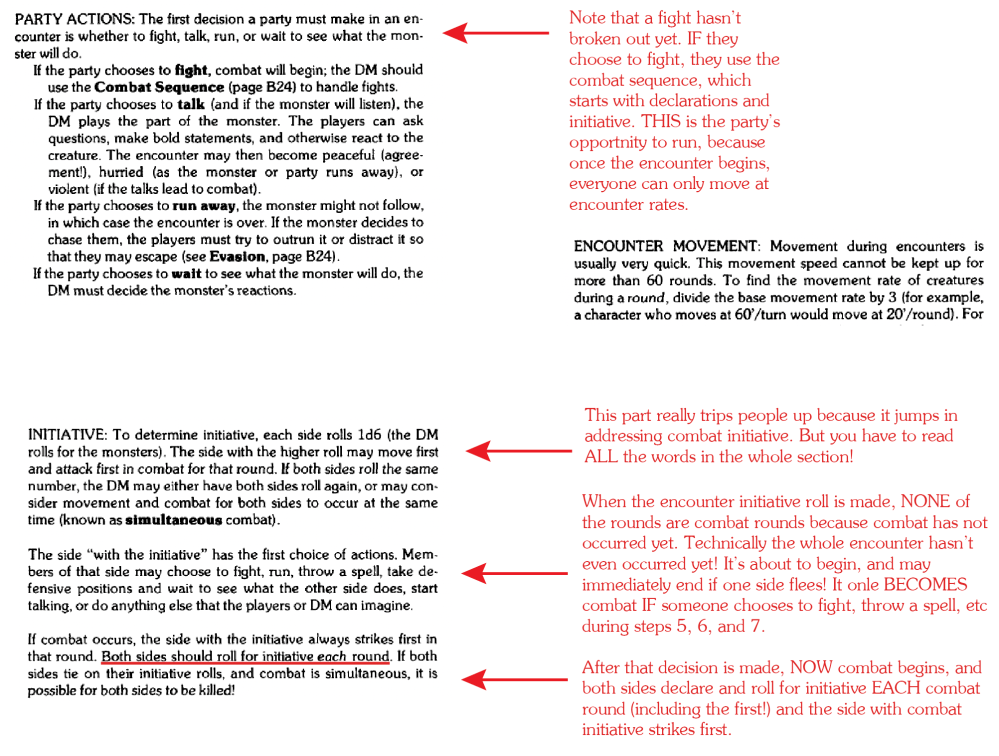
So why is this confusing? Well, the explanation text that accompanies the sequences isn’t exactly in the right order, frankly.
Example scenario 1:
So, now let’s assume the party won the encounter initiative and decides to try to talk, hide, or take up defensive positions.
Let’s also assume the monster reaction roll went badly: The monsters lost initiative, and will attack.
If we apply the encounter initiative to the first round of combat, the party has given up their advantage! The PCs won the initiative, but now the monsters can walk up and punish the PCs for not attacking first.
If we follow the sequence though, in step 7 everyone decides what to do:
7.) The PCs stand their ground or talk, the Monsters decide to attack
Combat Sequence begins:
1. Declare spells and melee movement, roll combat initiative
2. Initiative winner acts first
That’s a LOT more fair. The PCs did their best to parley, the monsters attack regardless but the PCs might still get to strike first. And that’s a LOT more like real life; just because I decide to pick a fight doesn’t mean I get to throw the first punch!
Example scenario 2:
Let’s assume the PCs win the encounter initiative, and decide to attack.
Firstly, they don’t even know what the monsters are or whether the monsters are violent! They just know an encounter is about to happen, and they won the initiative. Not even the DM knows whether they’re friendly or not, because that roll comes AFTER initiative.
Secondly, they already know they won initiative without declaring spells or movement, so there’s no risk to them, but also there’s no way to apply adjustments for movement! The monsters haven’t even had the chance to exist yet, much less decide to retreat or cast spells, so the DM can also make advantageous meta decisions.
Finally, the party might instantly vaporize the monsters only to discover it was a party of friendly NPCs looking to trade.
Finishing all the steps of the Encounter sequence lets the sides see each other, and express their decisions to act. That tells everyone whether the encounter has been engaged, or avoided, and whether combat is about to begin.
Example scenario 3:
Try to imagine a neutral encounter goes south. The monsters win initiative, they’re cautious, but not violent. The players parley, a few minutes of RP dialog occur, and the monsters decide to attack.
If you’ve decided “Well, the monsters won the initiative at the start of the encounter, so they get to attack you,” the table would erupt in argument. The players would demand a combat initiative roll. “That roll wasn’t for combat! It was just to determine whether we were going to talk or run or hide!”
And they’d be precisely right.
And that brings us to the final point:
Encounters should be avoidable, and this is the mechanism for it:
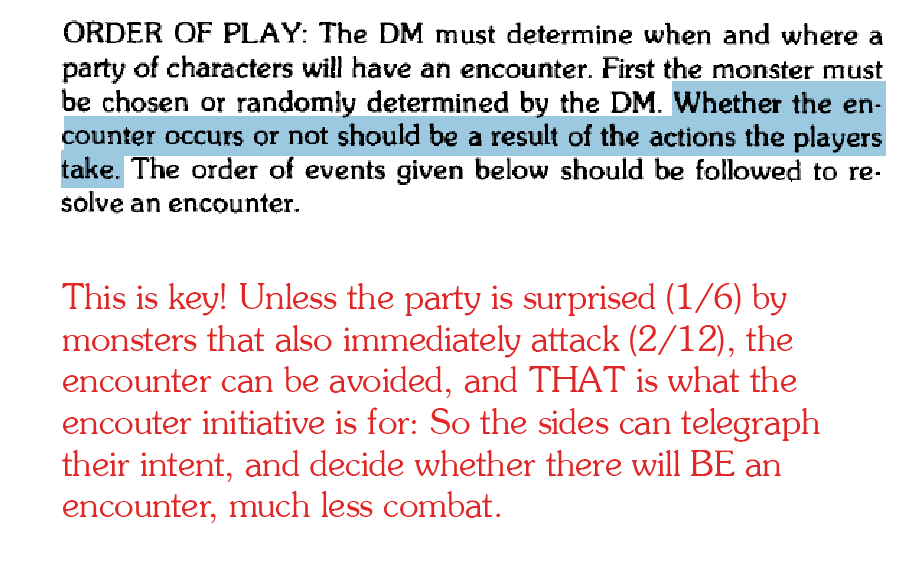
Whether the players win or lose the encounter initiative roll, they get to decide:
We want to stay and fight.
We want to stay and talk – understanding it might result in a fight
We want to hide – understanding we might be found and fight
We want to flee and exit the encounter – understanding we may be caught and fight.
But if you don’t separate the encounter initiative from the combat initiative, every encounter could instantly become combat, which automatically commits the party against their will.
More thoughts in the comments, thanks to all who chimed in!


 "You see this."
Leave a reply to samucabrainstorm Cancel reply