A lot of tables run right over the encounter initiative roll in OSE and BX games, but that mechanic is what allows PCs and monsters alike to avoid combat, run, hide, parley, surrender, and more.
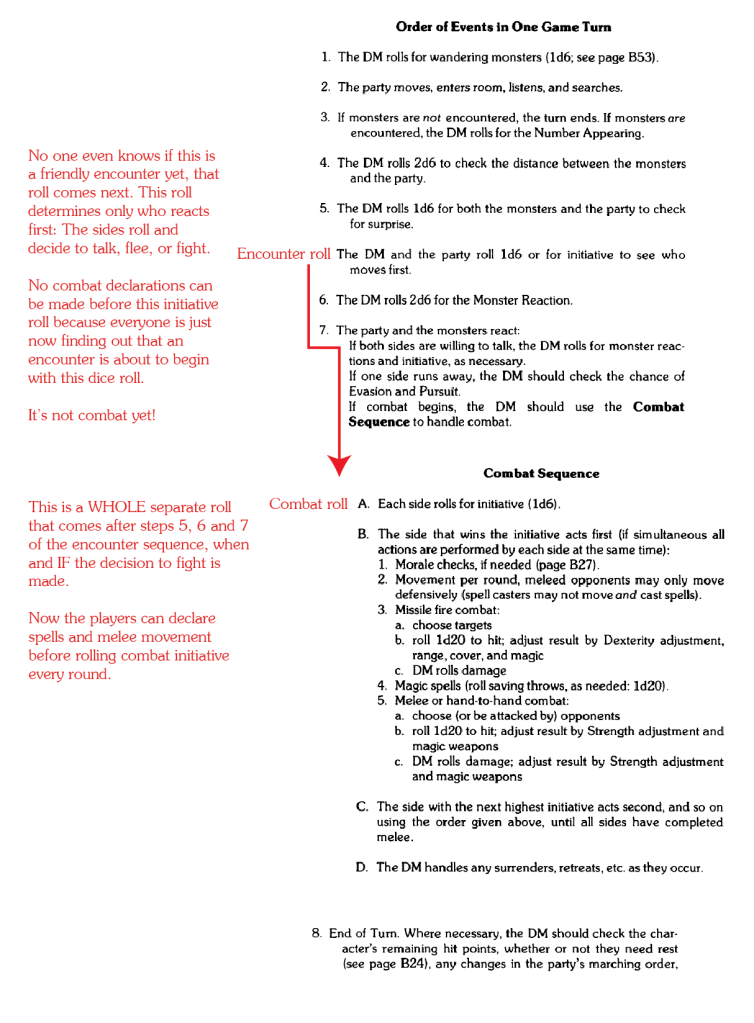
Let’s review the sequence, starting with the encounter:
1. Roll for wandering (yes) then type, number, distance
2. Roll for surprise (none), Roll initiative
3. Roll monster reaction (after initiative!)
4. Sides react, deciding to fight, talk, or flee.
If (IF!) combat erupts, use the encounter sequence. And that sequence includes its own initiative roll:
A. Declare spells, movement
B. Roll initiative every round
C. Winner acts (Move, Missile, Magic, Melee)
D. Loser(s) act
E. Surrenders, retreats, check morale at 1st and half
There are definitively two rolls.
One happens before the DM even knows if the monsters are violent or enthusiastically friendly, well after the opportunity to make combat declarations for spells and movement has passed—and the other happens after steps 5, 6, and 7 are complete. A LOT of things can happen in that time, and only one of those things is combat:
So why is this confusing? Well, the explanation text that accompanies the sequences isn’t exactly in the right order, for one. And secondly, the text in the INITIATIVE section on B23 mixes the explanations of combat initiative and encounter initiative so severely that you have to do surgery to make the rest of the instructions match:
“To determine initiative, each side rolls 1d6 (the DM rolls for the monsters). The side with the higher roll may move first and attack first in combat for that round.”
It seems painfully damning—but moving first is the language of the encounter sequence, and attacking first speaks to combat. “That round” is respective. It reminds me of the oxford comma cartoon:

Syntax would help. “The side with the higher roll may move first—and attack first in combat—for that round.” or even better yet, “The side with the higher roll for that round acts first.”
“If both sides roll the same number, the DM may either have both sides roll again, or may consider movement and combat for both sides to occur at the same time (known as simultaneous combat).”
^^This is purely discussing combat, and we’re not even in the combat section yet, it’s out of order.. this is how we know the initiative heading is ahead of its skis.
“The side “with the initiative” has the first choice of actions. Members of that side may choose to fight, run, throw a spell, take defensive positions and wait to see what the other side does, start talking, or do anything else that the players or DM can imagine.”
^^Now we’re back to encounters. The initiative encounter winner gets to choose first. They can choose to run or talk or wait because combat has not begun.
“If combat occurs, the side with the initiative always strikes first in that round. Both sides should roll for initiative each round. If both sides tie on their initiative rolls, and combat is simultaneous, it is possible for both sides to be killed!”
^^ Now we’re back to combat. IF combat occurs, the side that wins initiative always strikes first in that round – the combat round. Again, its ahead of its skis. This is on page B23, combat is on page B24.
But as usual, I’ve buried the lead. Except for surprse, all encounters are meant to be avoidable:
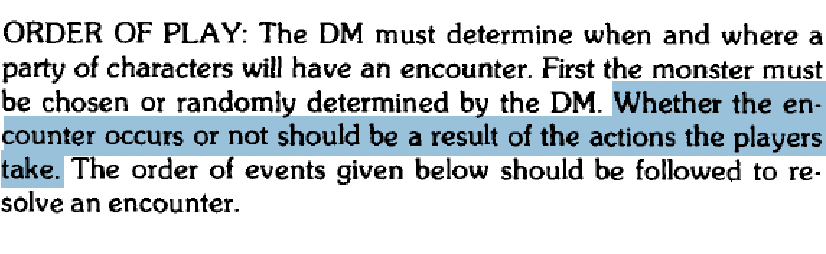
This can only be true if combat has not begun. You can not run to evade once combat begins (B24). Whether the players win or lose the encounter initiative roll, they still get to decide whether or not combat will begin. It’s not thrust upon them just by losing the roll:
We want to stay and fight.
We want to stay and talk – even though there is risk combat may begin later.
We want to hide – even though there is risk we may be found and attacked later.
We want to flee and exit the encounter – understanding we may be pursued.
A separate roll preserves player agency without making rulings.


 "You see this."
Leave a comment